


| SNo. | Scientific Name | Locality | Habitat | Basis of Record | Description | Recorded By | Record Number | Island | Source | Date |
|---|---|---|---|---|---|---|---|---|---|---|
| 1 | Schiedea sarmentosa | Locality redacted. Contact Bishop Museum Botany Department for details | Preserved_Specimen | Forbes, C.N. | 133 | Molokai | BISH | 1912-07-01 | ||
| 2 | Schiedea sarmentosa | Locality redacted. Contact Bishop Museum Botany Department for details | Preserved_Specimen | Forbes, C.N. | 133 | Molokai | BISH | 1912-07-01 | ||
| 3 | Schiedea sarmentosa | Locality redacted. Contact Bishop Museum Botany Department for details | In Dodonaea-Styphelia lowland mesic shrubland with Vaccinium, Psychotria, Diospyros, Sophora chrysophylla, Neraudia sericea, Lipochaeta rockii, Bidens menziesii, Myoporum, Wikstroemia, Metrosideros, Pleomele, Pittosporum, Scaevola, Urera glabra, Lantana, Melinis minutiflora, Schiedea. | Preserved_Specimen | Perlman, S. | 6676 | Molokai | BISH | 1987-10-23 | |
| 4 | Schiedea sarmentosa | Locality redacted. Contact Bishop Museum Botany Department for details | Preserved_Specimen | Forbes, C.N. | 133 | Molokai | BISH | 1912-07-01 | ||
| 5 | Schiedea sarmentosa | Locality redacted. Contact Bishop Museum Botany Department for details | SW aspect, thin gray soil; Dodonaea, Leptecophylla, Wikstroemia, Schiedea sarmentosa, Silene alexandri, Lepidium bidentatum, Metrosideros, Ageratina, Melinis, Bidens, Lipochaeta, Cocculus, Sicyos, Myoporum, Doryopteris, Cyperus, Alyxia, Antidesma, Sida, Luzula, Diospyros, Chenopodium oahuensis, Wahlenbergia, Osteomeles, Deparia petersenii, Solanum amiericanum | Preserved_Specimen | <30 cm; many branched clumps | Oppenheimer, H.L. | 90803 | Molokai | BISH | 2008-09-17 |
| 6 | Schiedea sarmentosa | Locality redacted. Contact Bishop Museum Botany Department for details | Steep rocky N-facing slope above streambed | Preserved_Specimen | Straggling shrubs, basal-branching; stems to 0.6 m long. | Lau, J. | 2871 | Molokai | BISH | 1986-10-15 |
| 7 | Schiedea sarmentosa | Locality redacted. Contact Bishop Museum Botany Department for details | In new fenced unit in dry forest site with Metrosideros- Leptecophylla, Coprosma foliosa, Sida fallax, Dodnaea viscosa, Bidens menziesii, Schiedea sarmentosa, Diospyros sandwicensis, Silene lanceolata, Carex wahuensis, Luzula hawaiiensis. | Preserved_Specimen | Smll sprawling herbs about 1 ft ht with fls and frt, hundreds of plants. | Perlman, S. | 19939 | Molokai | BISH | 2005-12-28 |
| 8 | Schiedea sarmentosa | Locality redacted. Contact Bishop Museum Botany Department for details | Old jeep road (adjacent to E side of area) leading to Pu'u Kolekole, main branch of gulch, On large rock outcrop with Schiedea lydgatei nearby. With Melinus, Sida fallax, Euphorbia, Lipochaeta rockii, Styphelia, Bidens, menziesii, and Eragrostis | Preserved_Specimen | Wagner, W.L. | 6681 | Molokai | BISH | 1992-01-19 | |
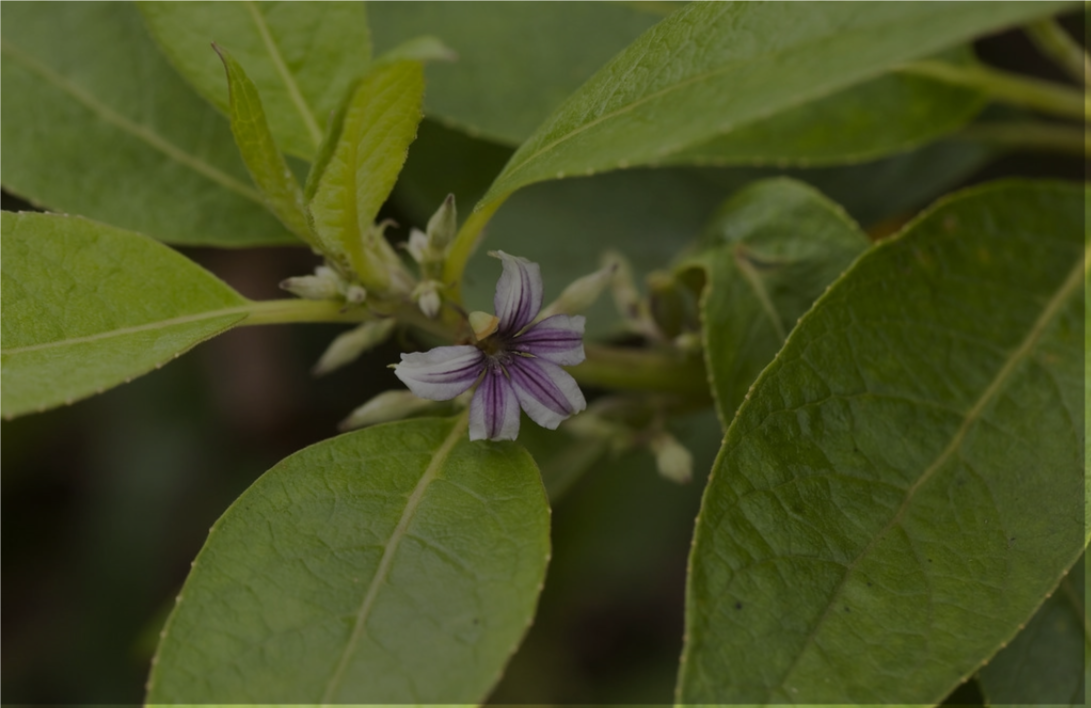
| 9 | Schiedea sarmentosa | Locality redacted. Contact Bishop Museum Botany Department for details | open-mixed scrub. | Preserved_Specimen | 6-10 inches tall. Leaves mostly 1-nerved, a few faintly 3-nerved. Staminodia 1/2 length of sepals, bifid. | Char, W.P. | 82.038 | Molokai | BISH | 1982-10-27 |
| 10 | Schiedea sarmentosa | Locality redacted. Contact Bishop Museum Botany Department for details | In Dodonaea-Styphelia lowland mesic shrubland with Vaccinium, Psychotria, Diospyros, Sophora chrysophylla, Neraudia sericea, Lipochaeta rockii, Bidens menziesii, Myoporum, Wikstroemia, Metrosideros, Pleomele, Pittosporum, Scaevola, Urera glabra, Lantana, Melinis minutiflora, Schiedea. | Preserved_Specimen | Perlman, S. | 6676 | Molokai | BISH | 1987-10-23 | |
| 11 | Schiedea sarmentosa | Locality redacted. Contact Bishop Museum Botany Department for details | Steep rocky N-facing slope above streambed | Preserved_Specimen | Straggling shrubs, basal-branching; stems to 0.6 m long. | Lau, J. | 2870 | Molokai | BISH | 1986-10-15 |
| 12 | Schiedea sarmentosa | Locality redacted. Contact Bishop Museum Botany Department for details | Preserved_Specimen | Faurie, A. | 1085 | Molokai | BISH | 1910-06-10 |
Lorem ipsum dolor sit amet, consectetur adipiscing elit, sed do eiusmod tempor incididunt ut labore et dolore magna aliqua. Ut enim ad minim veniam, quis nostrud exercitation ullamco laboris nisi ut aliquip ex ea commodo consequat. Duis aute irure dolor in reprehenderit in voluptate velit esse cillum dolore eu fugiat nulla pariatur. Excepteur sint occaecat cupidatat non proident, sunt in culpa qui officia deserunt mollit anim id est laborum.
Lorem ipsum dolor sit amet, consectetur adipiscing elit, sed do eiusmod tempor incididunt ut labore et dolore magna aliqua. Ut enim ad minim veniam, quis nostrud exercitation ullamco laboris nisi ut aliquip ex ea commodo consequat. Duis aute irure dolor in reprehenderit in voluptate velit esse cillum dolore eu fugiat nulla pariatur. Excepteur sint occaecat cupidatat non proident, sunt in culpa qui officia deserunt mollit anim id est laborum.
Lorem ipsum dolor sit amet, consectetur adipiscing elit, sed do eiusmod tempor incididunt ut labore et dolore magna aliqua. Ut enim ad minim veniam, quis nostrud exercitation ullamco laboris nisi ut aliquip ex ea commodo consequat. Duis aute irure dolor in reprehenderit in voluptate velit esse cillum dolore eu fugiat nulla pariatur. Excepteur sint occaecat cupidatat non proident, sunt in culpa qui officia deserunt mollit anim id est laborum.
Lorem ipsum dolor sit amet, consectetur adipiscing elit, sed do eiusmod tempor incididunt ut labore et dolore magna aliqua. Ut enim ad minim veniam, quis nostrud exercitation ullamco laboris nisi ut aliquip ex ea commodo consequat. Duis aute irure dolor in reprehenderit in voluptate velit esse cillum dolore eu fugiat nulla pariatur. Excepteur sint occaecat cupidatat non proident, sunt in culpa qui officia deserunt mollit anim id est laborum.
Lorem ipsum dolor sit amet, consectetur adipiscing elit, sed do eiusmod tempor incididunt ut labore et dolore magna aliqua. Ut enim ad minim veniam, quis nostrud exercitation ullamco laboris nisi ut aliquip ex ea commodo consequat. Duis aute irure dolor in reprehenderit in voluptate velit esse cillum dolore eu fugiat nulla pariatur. Excepteur sint occaecat cupidatat non proident, sunt in culpa qui officia deserunt mollit anim id est laborum.
Lorem ipsum dolor sit amet, consectetur adipiscing elit, sed do eiusmod tempor incididunt ut labore et dolore magna aliqua. Ut enim ad minim veniam, quis nostrud exercitation ullamco laboris nisi ut aliquip ex ea commodo consequat. Duis aute irure dolor in reprehenderit in voluptate velit esse cillum dolore eu fugiat nulla pariatur. Excepteur sint occaecat cupidatat non proident, sunt in culpa qui officia deserunt mollit anim id est laborum.
Thank you for your interest in submitting an image of
Select your image and leave a brief description of your photo below.